Charge
Feed mineral, polymer or formulated powder through the main inlet. Add liquid or surface-treatment agent through the assist port when required.
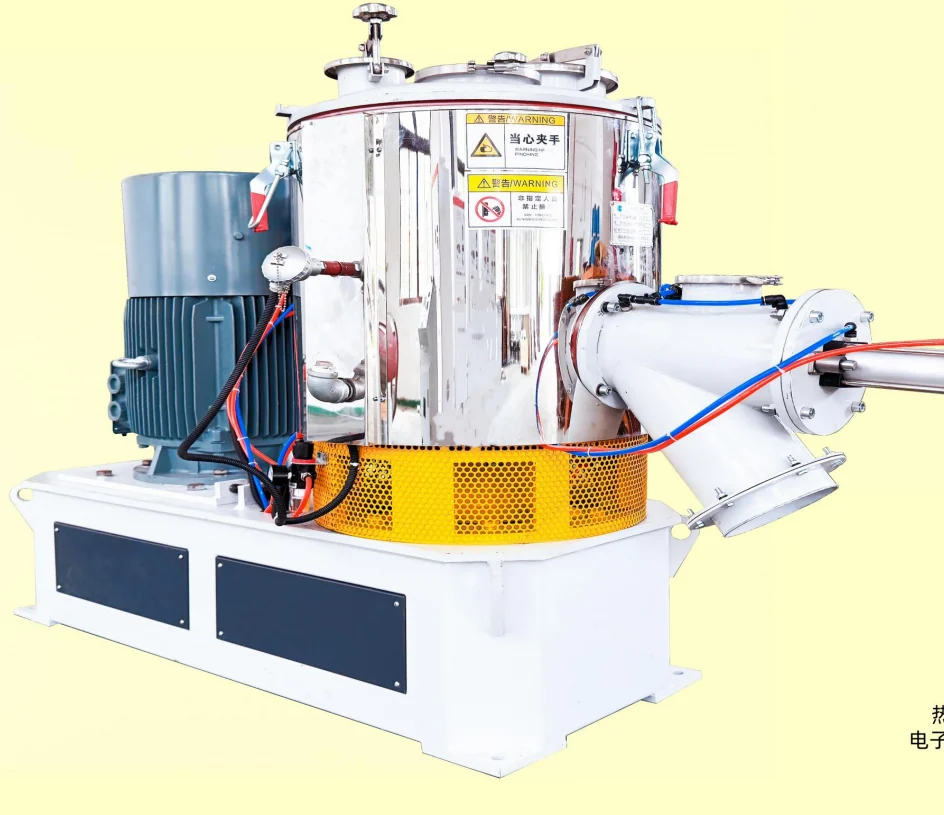
The GL Series high speed powder modifier combines controlled fluidization, high-shear mixing and thermal conditioning in one serviceable batch platform.
THE COMPANY BEHIND THE MACHINE
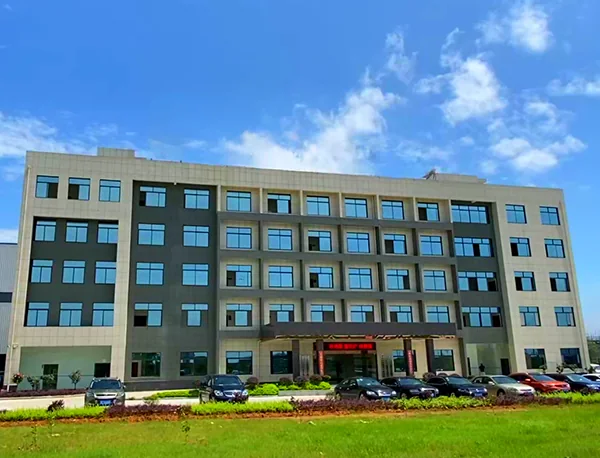
Shanghai Cronus Machinery Co., Ltd. is the Shanghai subsidiary of Guilin Mining Machinery Co., Ltd. (formerly Guilin Mining Machinery Factory), founded in 1973.
For more than five decades, the Guilin manufacturing group has designed, cast, machined and commissioned powder-processing equipment. That history gives Cronus a practical advantage: we understand not only the machine, but the powder, the wear pattern and the production line around it.
Our teams support mineral, chemical, polymer, battery, construction and specialty-material producers with equipment studies, pilot testing, engineering, commissioning and lifecycle parts.
Learn about Cronus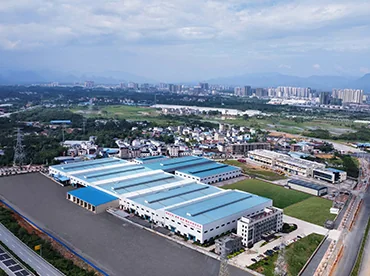
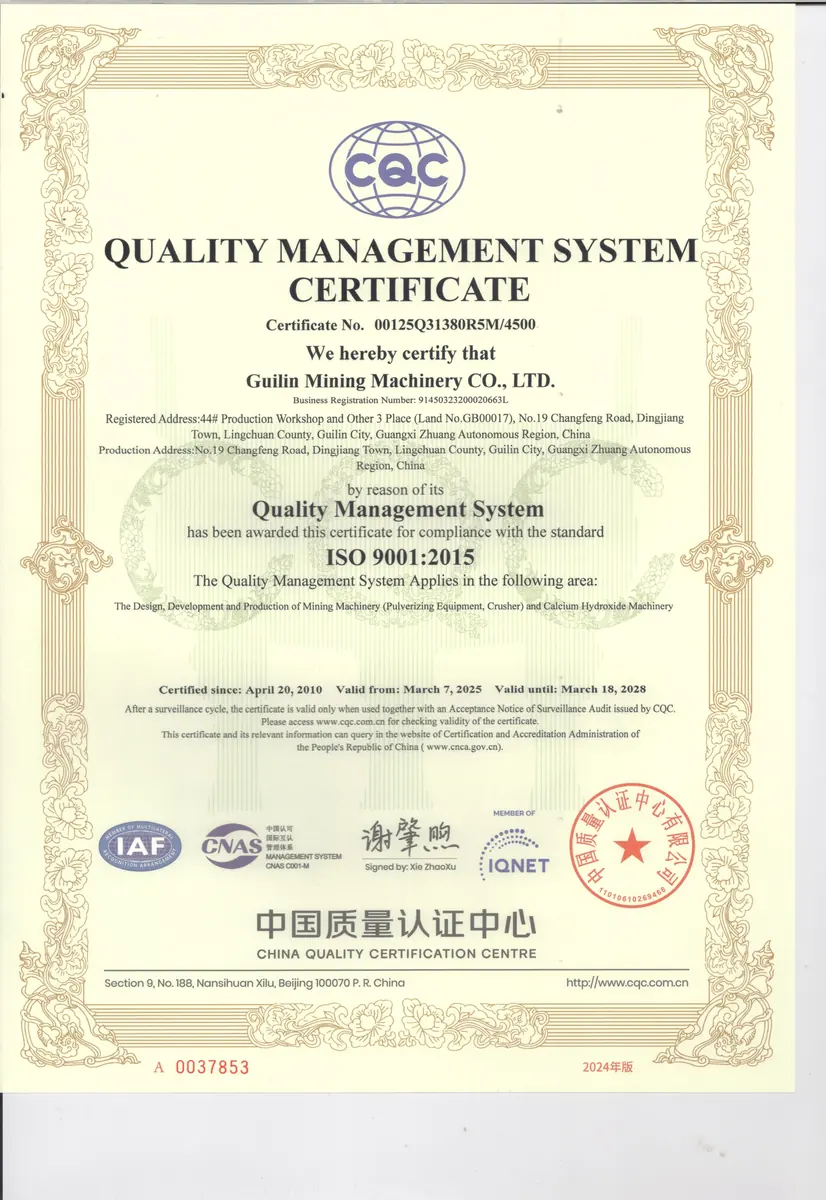
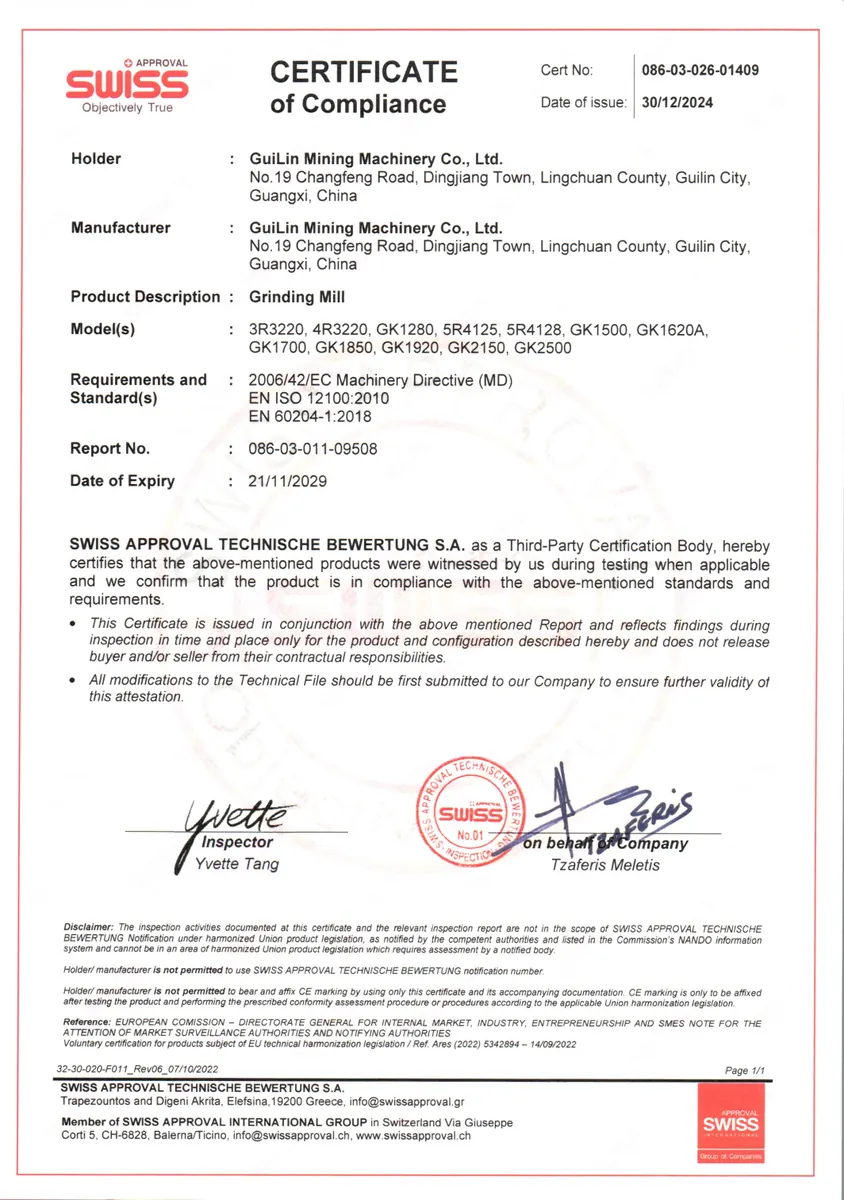
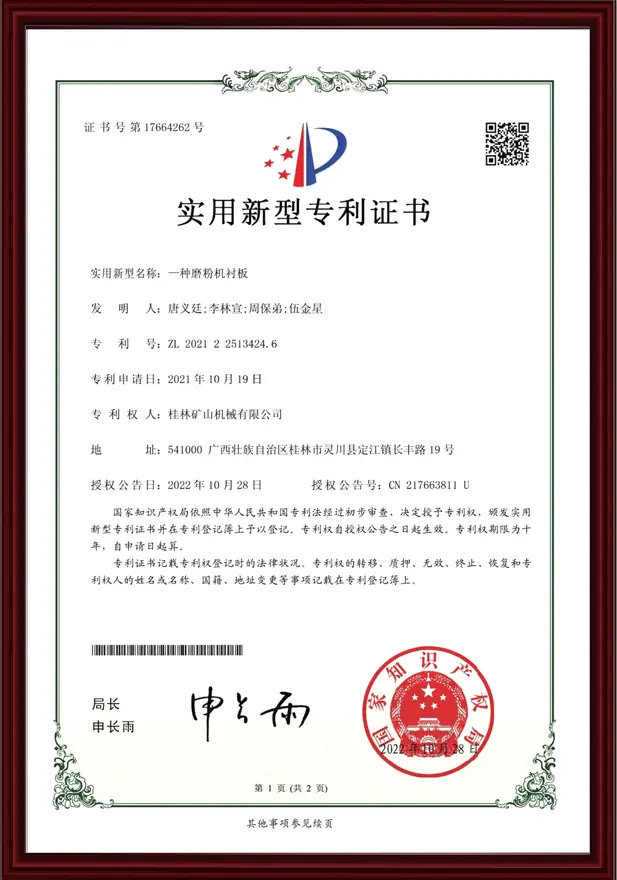
DOCUMENTED QUALITY
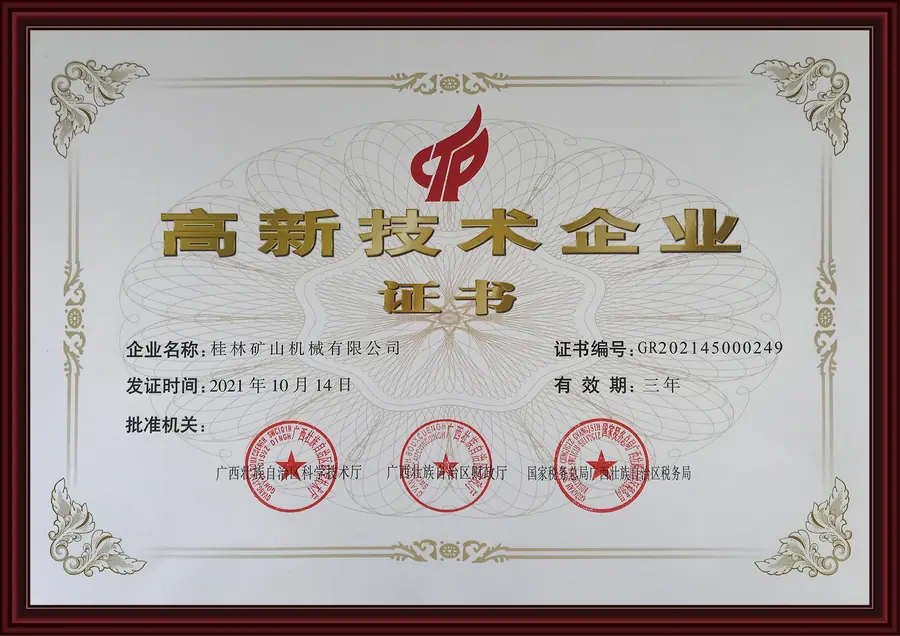
Selected credentials from the manufacturing group. Certification scope and configuration are confirmed for each order.
THE GL SERIES
From laboratory-scale trials to multi-hundred-litre production, the GL family lets you scale a validated process without changing the underlying mixing logic.
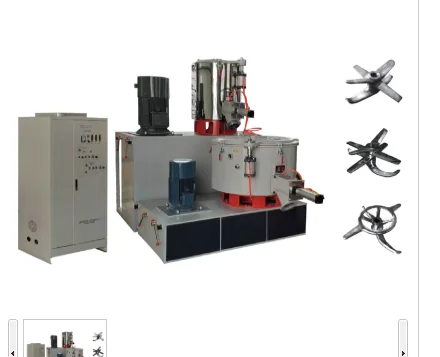
Choose stainless steel 304/316 contact parts, ceramic or wear-resistant lining, electric or self-friction heating, manual or pneumatic discharge and process instrumentation around the job.
A defined charge, mix, heat and discharge cycle gives operators a stable window for coating chemistry, color development and dispersion.
ATop cover access, inspection port, robust shaft sealing and serviceable wear components simplify clean-down and scheduled maintenance.
BPROCESS LOGIC
The lower blade lifts the charge; the upper blade returns and folds it through the vessel. Controlled turbulence keeps powder moving through the working zone instead of sitting in dead pockets.
The bowl, shaft, blades, seal system and discharge assembly work as one process envelope.
Feed mineral, polymer or formulated powder through the main inlet. Add liquid or surface-treatment agent through the assist port when required.
Variable-speed blades create a three-dimensional circulation pattern, breaking agglomerates and exposing fresh particle surface.
Self-friction heat or electric heat brings the batch to its target window while shear and residence time build the desired coating or dispersion.
Manual or pneumatic discharge opens the side outlet for a clean, controlled transfer to screening, packing or the next line step.
High-speed circulation shortens the route to a uniform batch without relying on long soak times.
Impeller geometry, lining and heating are selected around flowability, abrasiveness, temperature and chemistry.
Robust sealing, balanced blades and accessible wear parts keep routine maintenance predictable.
Pulse dust removal and enclosed transfer options reduce secondary contamination and housekeeping load.
APPLICATION FIT
GL modifiers are used where particle surface, dispersion, flow or compatibility changes the commercial value of a powder.
MATERIALS TO DISCUSS
We evaluate flowability, moisture, particle size, abrasiveness and coating chemistry before recommending a configuration.
Start a material reviewENGINEERED IN THE FIELD
Cronus projects combine equipment, controls, dust management and transfer so the modifier behaves like part of a production system.
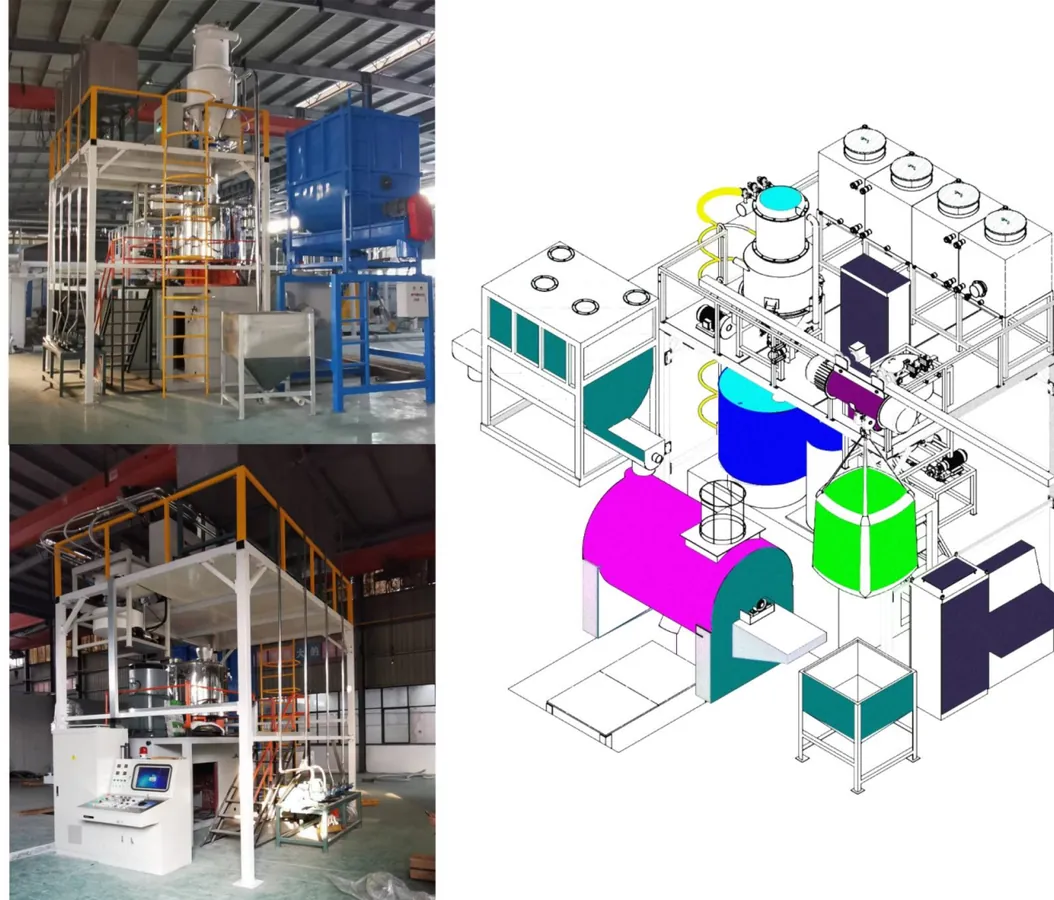

Factory tours, sample testing and remote commissioning are available for qualified projects.
Plan a visit or sample testSELECT THE RIGHT SIZE
The figures below are reference values from the GL technical range. Final capacity, power and utilities are confirmed against your powder, batch recipe and site conditions.
| Model | Total volume (L) | Effective volume (L) | Motor + heating (kW) | Main shaft speed (rpm) | Heating | Discharge |
|---|---|---|---|---|---|---|
| GL-10A | 10 | 7 | 3 / 1.5 | 0-1500 | Self-friction or electric | Manual or pneumatic |
| GL-25A | 25 | 20 | 7.5 / 3 | 0-1500 | ||
| GL-50A | 50 | 35 | 11 / 3 | 0-1500 | ||
| GL-100A | 100 | 75 | 22 / 6 | 0-1300 | ||
| GL-200A | 200 | 150 | 45 / 6 | 0-950 | ||
| GL-300A | 300 | 225 | 55 / 9 | 0-950 | ||
| GL-500A | 500 | 375 | 75 / 9 | 0-860 | ||
| GL-800A | 800 | 600 | 110 / 16 | 0-740 | ||
| GL-1000A | 1000 | 750 | 132 / 16 | 0-740 | ||
| GL-1300A | 1300 | 975 | 160 / 16 | 0-740 |
GL combinations extend into 200/500, 300/600, 500/1000, 800/2000, 1000/3000 and 1300/4000 L total volume families, with separate cold-mix or hot-mix duty selected to the formulation.
GL OR CRGX?
Both families are built by the Cronus engineering network. The right choice depends on whether you need a controlled batch recipe or continuous surface treatment at high throughput.
This is a process-level distinction, not a substitute for a material test. Cronus engineers can compare both families against your feed rate, surface chemistry and operating window.
LIFECYCLE VALUE
A modifier is only as available as its wear parts. Cronus supplies original components and castings matched to the machine drawing and material duty.
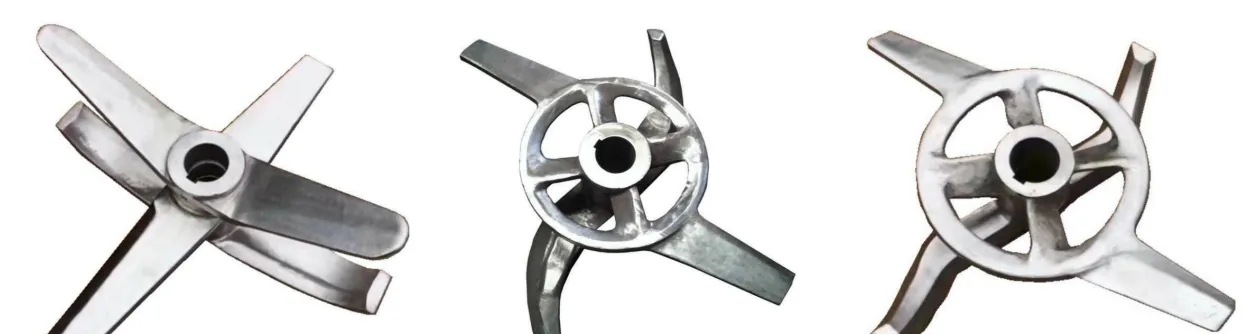
Balanced stainless or wear-coated components selected for flow pattern, abrasiveness and contact material.
Matched sealing sets support high-temperature service and reduce powder ingress around the main shaft.
Polished stainless, ceramic tile and sprayed tungsten-carbide options protect the working surface.
Pneumatic discharge components, temperature sensors, belts and control elements can be supplied as a service kit.
Original drawings, an in-house casting and machining network, batch traceability and practical pricing. We help you stock the parts that actually wear, not a warehouse of guesses.
FREQUENTLY ASKED QUESTIONS
The final configuration is always material-led. These answers explain what the GL platform is designed to do and what we need to confirm together.
It is a batch high-speed modifier for powder mixing, dispersion, coating, granulation, drying and surface treatment. Common targets include mineral fillers, polymer additives, pigments, battery powders and construction materials.
High-speed blades fluidize the charge, increase particle-to-particle contact and expose fresh surface. A liquid or solid treatment agent can then be distributed while the batch is heated by self-friction or electric heating.
Calcium carbonate, silica, talc, kaolin, magnesium oxide, aluminum hydroxide, wollastonite, feldspar, fly ash, graphite, iron oxide, polymer fillers and many formulated powders are typical starting points. A sample test is recommended for cohesive, moisture-sensitive or reactive powders.
Single machines range from 10 to 1300 L total volume. Combination units extend from 200/500 L to 1300/4000 L total volume families. Effective working volume is lower and depends on powder bulk density and flow behavior.
Heating is available through self-friction or electric heating. Cooling, jacket design and the control method are selected per duty; the project team will confirm the temperature window and utility load.
Manual and pneumatic discharge are standard choices. For larger automated lines, the outlet can be integrated with dust collection, closed conveying, screening and packing.
GL is a versatile batch platform with recipe control and defined residence time. CRGX is generally selected for continuous, high-throughput surface modification. We compare both against your feed rate, chemistry and changeover needs.
Three-blade, throwing-disc and pressing-disc styles are used for different flowability and bulk-density conditions. Cronus selects geometry after reviewing the material's flow, target dispersion and wear profile.
A project can include the modifier, electrical control cabinet, temperature instrumentation, discharge assembly, dust removal, feeding, conveying and commissioning. Scope is documented in the technical offer.
Yes. Share a representative sample, target throughput and treatment chemistry. Our engineers can define a trial plan, recommend a configuration and provide a process window for scale-up.
Original wear parts are supplied from the Cronus engineering network. Lead time depends on the drawing, material and quantity; planned service kits can be prepared around your maintenance calendar.
Remote troubleshooting, operating guidance, preventive-maintenance schedules, on-site service and parts support are available. A service handover includes operating parameters and recommended inspection points.
AFTER-SALES SUPPORT
The handover is not the end of the project. Cronus keeps the process, people and parts connected after the line starts.
We map material properties, target surface performance, batch size, utilities and layout before the offer.
Inspect the build, controls, contact surfaces and dry-run logic before shipment, in person or remotely.
Commission the machine, tune the operating window and train operators on safe, repeatable routines.
Keep a parts list, inspection cadence and escalation path for the years that follow.
START WITH YOUR MATERIAL
Share your material, target capacity and current pain point. A Cronus engineer will reply with the right next step: sample testing, a configuration review or a line discussion.